Digital tools reduce dental anxiety
New scanners and AI software in Kansas City area practices are replacing messy putty impressions with precise 3D models.
By Leila Farouk ·
More than 72% of dental patients report fear about visiting the dentist, according to the American Dental Association. One-third of those patients describe the fear as extreme. The sound of a drill causes the most anxiety, the report states. To address this, local practices are adopting digital tools that replace traditional methods with faster, less invasive procedures.
Heartland Dental, a large dental support organization operating multiple offices in the Kansas City area, uses the VideaHealth AI platform. This FDA-cleared software analyzes X-rays and other dental images to help dentists spot problems and track progress. The system stores data in a digital profile, which reduces the need for repeated physical examinations and improves convenience for both patients and providers.
Dr. Melanie Beck, director of digital dentistry at the UMKC School of Dentistry, previously ran Capstone Dentistry in Shawnee until July 2023. She joined UMKC in April 2026 to build a curriculum focused on digital methods. The program integrates computer-aided design, manufacturing, scanning, milling, and 3D printing into the standard training for new dentists. Beck says the goal is to make digital tools a core part of dental education rather than an optional add-on.
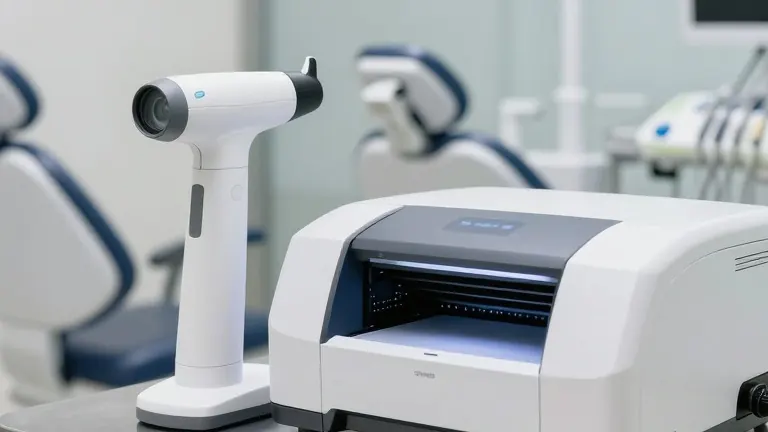
In her private practice, Beck used digital scanners for 90% of her crown cases. A handheld wand captures a rapid 3D model of a tooth, which is then sent to software for design. This process eliminates the use of physical putty impressions, which Beck describes as messy and uncomfortable for patients. She says that once dentists use scanners, they rarely return to conventional impression methods because the digital option is more accurate and patient-friendly.
Larry Sturm, president of lab services for Dental Art and Design, notes that digital dentures can be reprinted on the same day if needed. This capability removes the need for multiple office visits to adjust or replace a device. Traditional methods often require back-and-forth communication between the lab and the office, which extends the treatment timeline for the patient.
Some offices are also using 3D printers to create restorations from porcelain particles mixed with resin. These printed crowns are not as strong as milled porcelain crowns but serve as a quick replacement option. The main advantage is speed. With an in-house computer-aided design system and a digital scanner, a dentist can complete a crown restoration in 90 minutes. This avoids the weeks-long wait for a lab-made crown and the temporary crown that often does not fit well.
Sturm points out that digital systems require regular calibration of scanners and printers. He also notes that many systems are cloud-based, meaning a loss of internet connection can halt operations. Beck believes 3D printing will allow every dentist to create precise, aesthetic restorations using computer guidance, reducing the reliance on manual skill alone. The technology levels the playing field by making advanced design accessible to all practitioners.
The shift to digital dentistry is already visible in Kansas City area offices. Patients are experiencing shorter appointments and fewer follow-up visits. The integration of AI, scanning, and printing tools is changing the standard of care, making the process more efficient and less intimidating for those with dental anxiety.
Source: Kansas City Magazine · original report published
More Tech · Kansas City news · Report a business · Got a Story?