
Zeze's Sukiyaki Drama Premieres as Tokyo Film Festival Opener
The film explores the 1961 ballad that became the first Asian track to top the US charts, a status it held until BTS in 2020.
By Leila Farouk ·
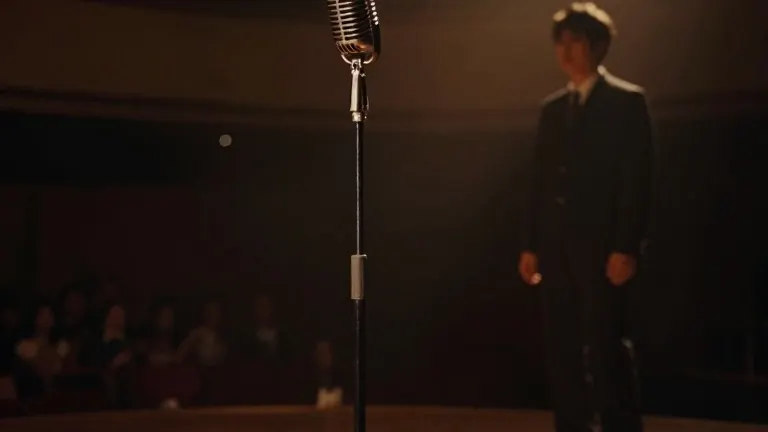
Takahisa Zeze’s drama Sukiyaki opened the 2026 Tokyo International Film Festival, marking a new screen adaptation of the story behind one of Japan’s most enduring musical exports. The film follows the creative process that produced the 1961 single, which later became a global phenomenon and a symbol of the country’s postwar recovery. It stars Junichi Okada as composer Hachidai Nakamura, Tori Matsuzaka as lyricist Rokusuke Ei, and Taiga Nakano as singer Kyu Sakamoto. The narrative centers on their collaboration during a period when rockabilly was overtaking jazz in popularity.
The song originated in 1961 when Nakamura and Ei wrote “Ue o Muite Aruko,” a title that translates to “I look upwards as I walk.” Nakamura blended traditional Japanese scales, jazz chords, and American pop influences into the melody. Ei’s lyrics, which reference looking up to prevent tears from falling, were inspired by the failure of mass protests to stop the Tokyo-Washington security treaty. The treaty maintained a significant American military presence in Japan. Sakamoto was brought in on short notice for the premiere at Tokyo’s Sankei Hall on July 21, 1961. He received the sheet music only two hours before the performance. Unrehearsed, he altered the tempo and key in ways that added distinctive quirks to the final recording.
The track found its way to the West in 1962 when Louis Benjamin of British label Pye Records discovered it during a visit to Japan. He commissioned Kenny Ball and his Jazzmen to record an instrumental version titled “Sukiyaki.” That version reached the British top ten in February 1963. After instrumental covers by Billy Vaughn and others failed to gain traction in the United States, Capitol Records decided to release the original Japanese vocal version under the simplified title. It hit US record stores on May 3, 1963, and reached number one on the Billboard Hot 100 in June. The song held the top spot for three weeks, making Sakamoto the first Japanese artist to achieve a US number one.
The single sold more than 13 million copies worldwide, topping charts in countries ranging from Australia to Norway. In Japan, the public reaction to the song’s international success prompted Toshiba to reissue the track. The 1963 cover included the title in katakana and the phrase “global hit.” The release coincided with a period of double-digit economic growth in Japan, as companies like Sony and Toyota expanded globally. The song became a point of national pride for a society still adjusting to the aftermath of wartime defeat and occupation.
The track continued to influence music for decades. In 1981, Janice-Marie Johnson, who later founded A Taste of Honey, released a version that topped the Billboard R&B chart and reached number three on the Hot 100. Johnson had contacted Ei in Japan to obtain an English translation of the lyrics. Her version was later sampled by Doug E. Fresh & Slick Rick in their 1985 hit “La Di Da Di.” The song also resurfaced in 2011 when 71 celebrities performed it in a television commercial following the earthquake and tsunami. It appeared in the Ghibli film From Up on Poppy Hill that same year. Tokyo Ska Paradise Orchestra played it during the closing ceremony of the Tokyo Olympics in August 2021.
Sakamoto died on August 12, 1985, when Japan Air Lines flight 123 crashed into a mountainside in central Japan. The Boeing 747 suffered catastrophic mechanical failure twelve minutes after takeoff from Tokyo. The pilots kept the aircraft airborne for approximately half an hour before the crash, killing 520 of the 524 people on board. It remains the deadliest single-aircraft disaster in aviation history. The song is played at the annual memorial service for the victims. The film Sukiyaki opens in Japan on Christmas Day, reuniting the three characters on screen as Sakamoto had hoped to do just before his death.
Source: The Hollywood Reporter